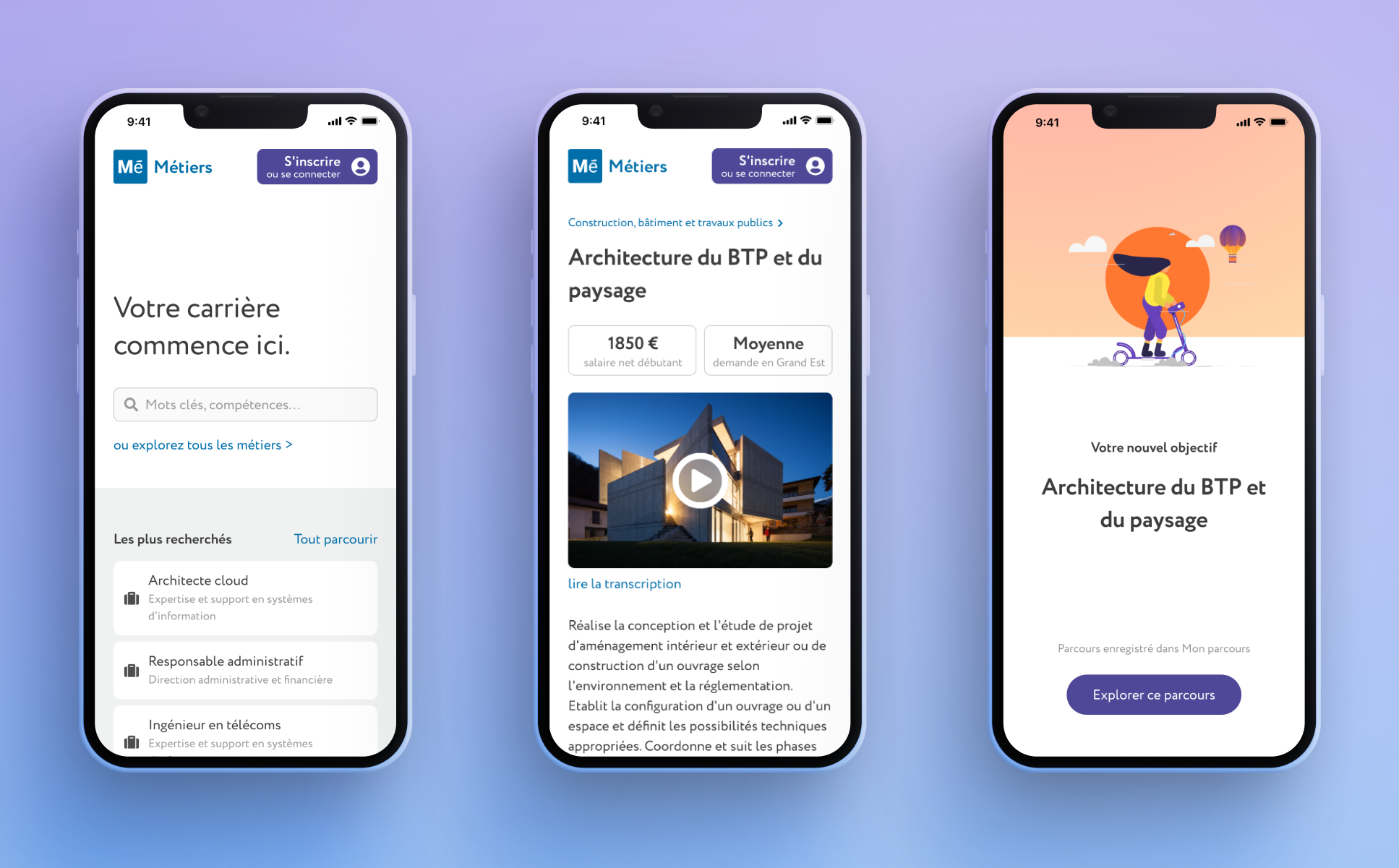
Research-driven project exploring how playful design can enhance engagement in digital career guidance tools, developed at KTH in collaboration with Addeo
Career guidance platforms play a crucial role in helping individuals make life-shaping decisions about their paths. However, they typically feel like uninspiring administrative tools. In collaboration with KTH and Addeo, I set out to explore whether playful design could transform serious contexts into engaging and meaningful experiences. Using the experimental PLEX framework, I led the ideation and design of Orient'Est Métiers, a mobile career guidance platform, with the goal of integrating playfulness in a way that would help users explore careers differently, build authentic goals, and stay engaged with their professional development.
I began by analyzing both the existing Orient’Est platform and the broader landscape of career guidance tools. Since the company had already surfaced key needs and pain points for Orient’Est Métiers, I used those insights as well, defining where design could meaningfully shift user behavior.
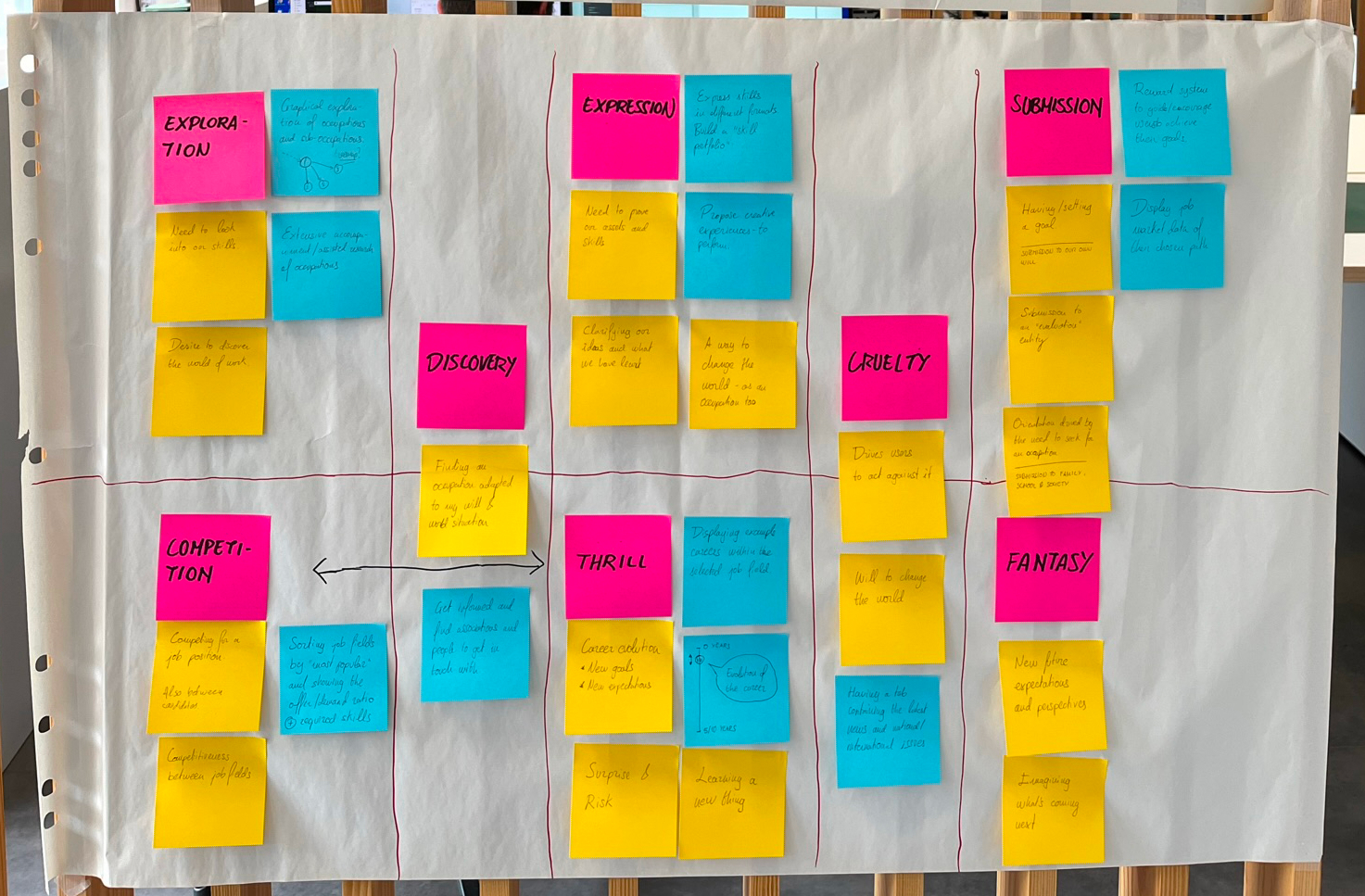
With this foundation in place, I facilitated three PLEX Scenario workshops with diverse participants. These sessions surfaced user stories from randomly drawn playful experiences, that were mapped to concrete interaction flows. This emotional-to-functional mapping ultimately provided the basis for the design of an interactive prototype that captured the specific experiences we set out to evoke.
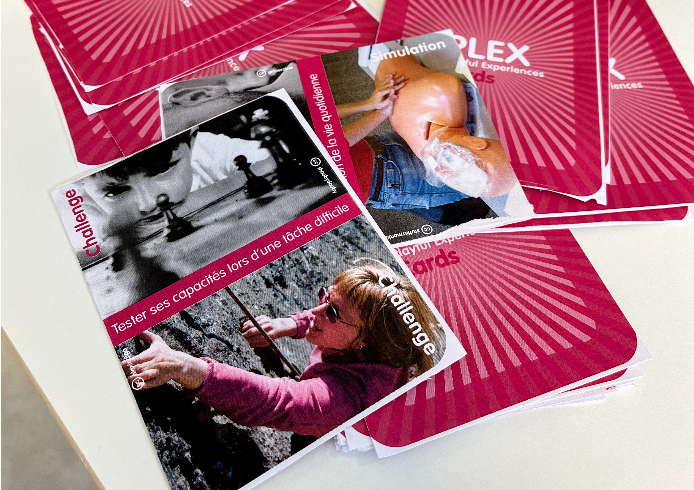
Working with six participants in pairs across three workshop sessions, I used PLEX Cards—a framework of 22 playful experiences—to co-create user stories based on emotional journeys. Each group imagined a career-guidance scenario using three randomly drawn cards, each representing a different playful experience, and then arranged them into a three-step narrative (beginning, continuation, and end) to shape the story.
I then analyzed the user stories and participant's reflections over a blank canvas, and started exploring how to better adjust these ideas to the context and expectations. This led to the definition of five key user flows, each designed to evoke specific playful experiences identified in the workshops. These flows represented the core actions within the platform, such as creating an account, exploring careers, and setting goals, and established the structural foundation for the product.
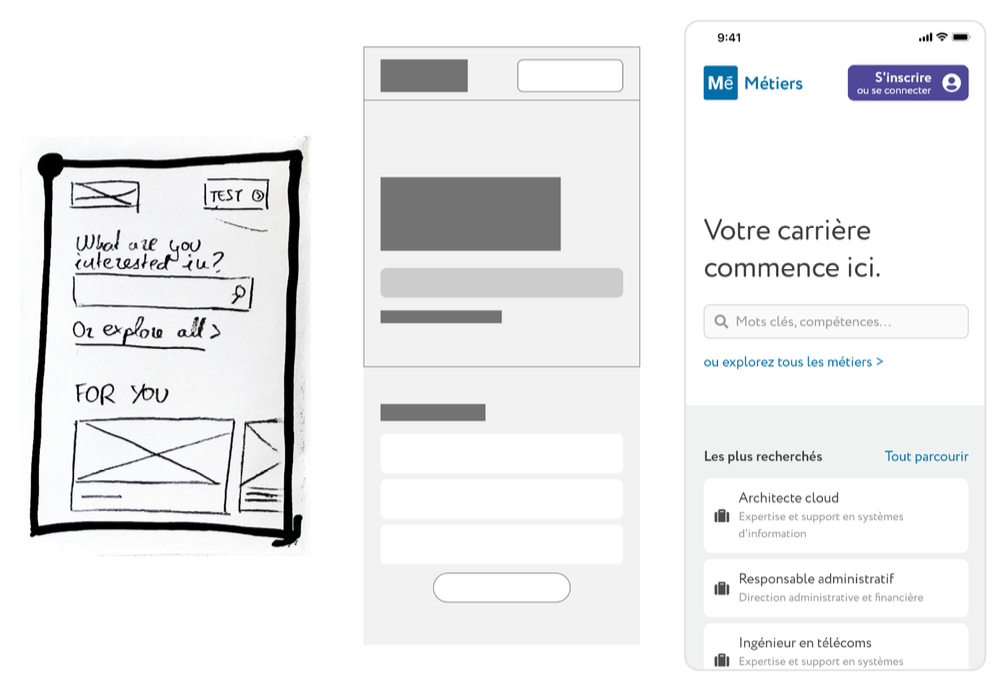
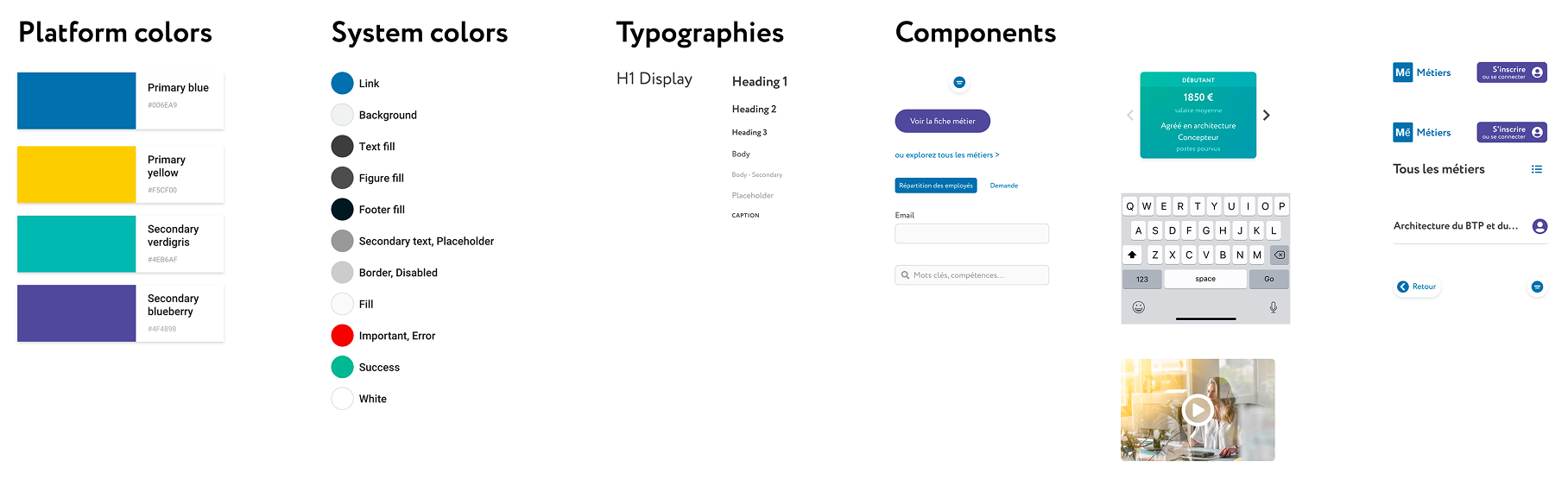
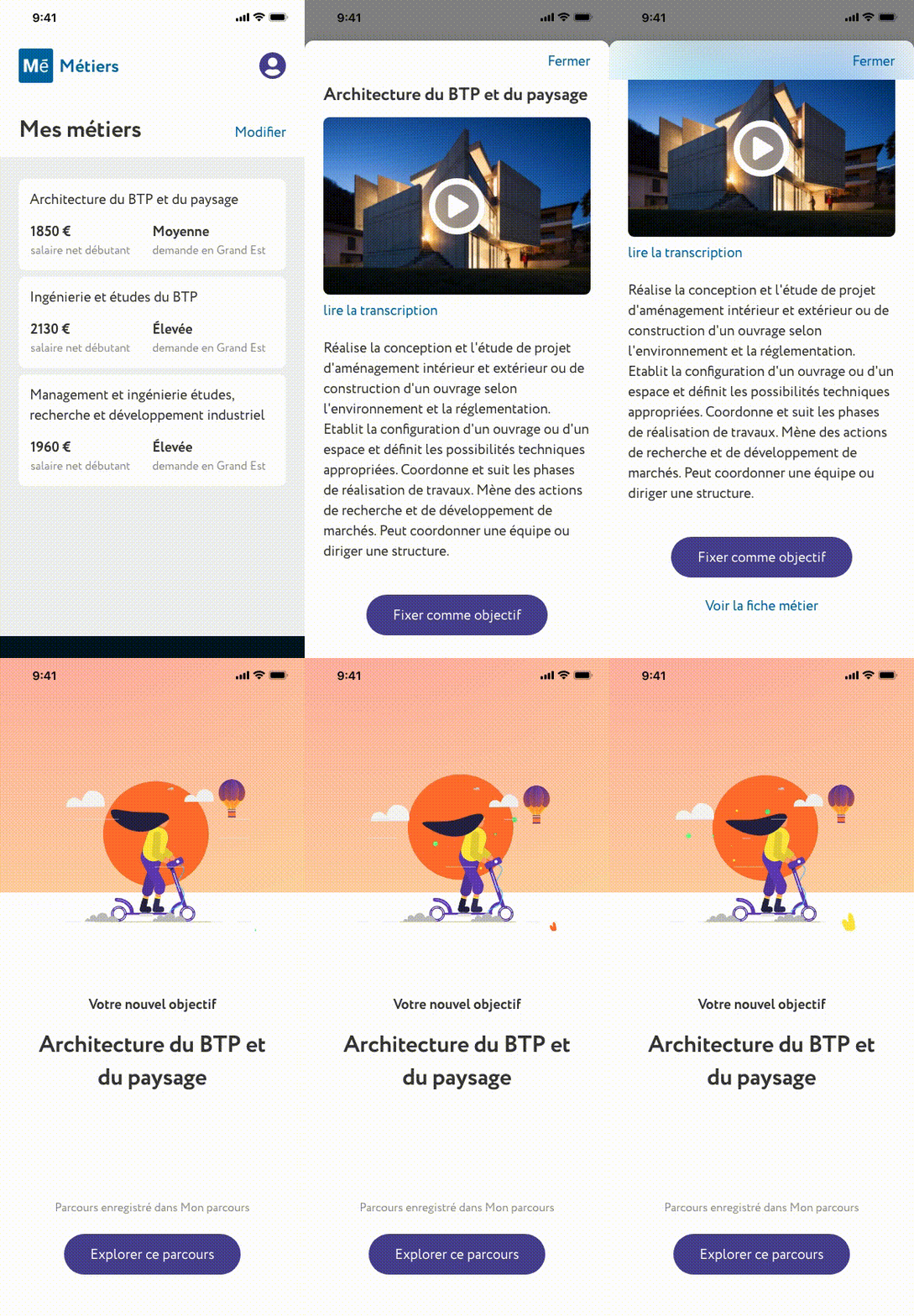
Starting with Crazy 8's sketches for each flow, I created digital wireframes to test structure and user actions. From there, I developed a visual identity (colors, typography, and logo) aligned with Orient’Est’s brand but also influenced by the project’s playful character. As the prototype evolved, these elements became reusable components forming a lightweight design system. The final interactive prototype included 27 mobile screens with playful elements such as Lottie animations and interactive components, allowing users to be fully immersed during testing sessions on their mobile device.
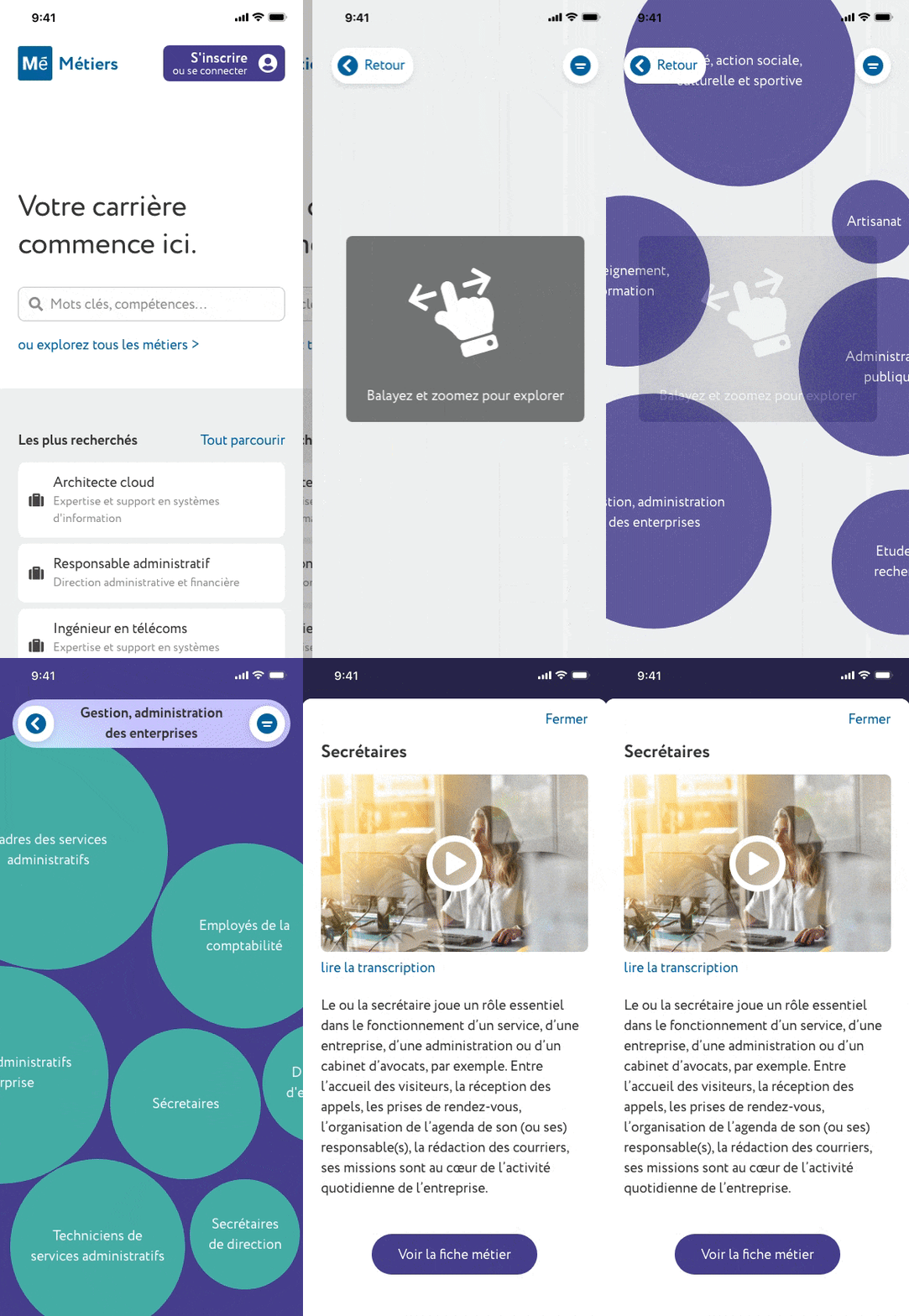
Career guidance platforms typically present careers only as endless scrollable lists or search results, overwhelming and disconnected from the relationships between fields. Users needed a way to understand how domains relate to each other while exploring freely.
I designed an interactive visualization where career domains appear as sized bubbles, with larger bubbles representing fields with more demand in the Grand Est. Users can tap domains to reveal related careers, explore parent-child relationships, and understand the career landscape spatially. The interaction feels less like searching a database and more like exploring a landscape, eliciting Discovery and Exploration at every tap.
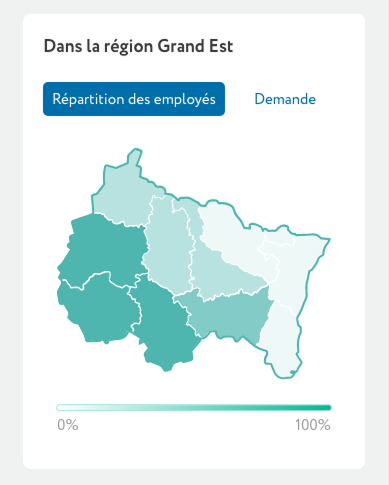
The career page then provides concise and visual information, with playful animations and interactive graphs showing employment data in the region (Competition) as well as career evolution prospects (Fantasy).
Career goals feel abstract and distant, especially for students. The platform needed to help users commit to a goal and support them along the way, visualizing their progress in a motivating way.
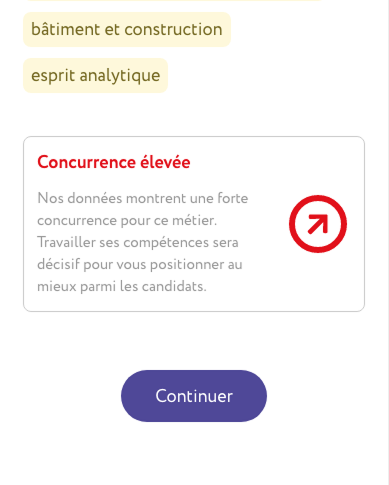
I created 'My journey,' a personal space where users collect interesting careers in 'My careers,' then set a goal when ready. The moment of goal-setting triggers a celebratory animation (Thrill), acknowledging the commitment. Then, users are presented with their future prospects (Fantasy) and an evaluation of their skills, as well as extra information. The journey page visualizes progress through skills gained, courses enrolled, and milestones reached. Users can update their goal anytime, maintaining flexibility while building momentum. The design balances structure (Submission to their chosen path) with freedom.
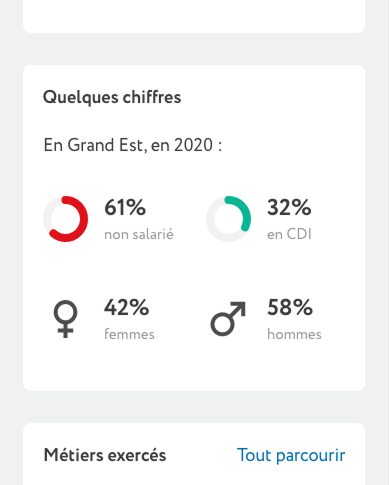
The platform presents Grand Est-specific employment data through visual representations (unemployment rates, contract types, gender distribution), making abstract statistics tangible. Users can compare career paths side-by-side, understanding not just what jobs exist, but the reality of entering those fields in their region (Competition).
I evaluated the prototype through task-based testing and structured interviews with 10 participants, measuring the elicitation of specific playful experiences using a Likert scale. The results validated that playfulness can succeed in serious contexts.
9 out of 10 participants rated the overall experience as playful, with 6 giving the highest
rating.
Specific playful experiences were successfully elicited:
This work demonstrated that playful design frameworks, like PLEX, can be systematically applied to non-playful contexts. It contributes methodology for translating workshop insights into concrete design decisions, addressing a gap in the HCI research on situated play.
This project taught me how to bridge research frameworks and practical design, and revealed important insights about designing for emotion.
Given more time, I'd iterate on the underperforming experiences, test with a broader demographic sample, and develop design patterns for translating specific PLEX experiences into UI elements.